Original: $4.34
-65%$4.34
$1.52The Story
What Is Cous Cous?
Consisting of many tiny granules made from steamed and dried durum wheat, couscous has become a popular alternative to rice and pasta.
Why Should I Get Cous Cous?
Because of its light, fluffy texture, which is a little bland in flavour, makes it perfect for soaking up the flavours of other ingredients.
Couscous may also be used to make tabbouleh salad. Though usually cooked in water, it can also be cooked in another liquid, like apple juice, and served with dried fruit and honey.
Storage Instructions:
Store in a cool dry place, away from direct sunlight, heat and damp.
Packaging Details:
Eco Friendly 100% Recyclable Packaging. Re-sealable pouch for Long Lasting Freshness!
(Some Large sizes may have non-resealable packaging)
FAQ
How do I cook couscous? It is usually cooked in water, though it can also be cooked in another liquid such as apple juice. Its light, fluffy texture soaks up the flavours of other ingredients.
What can I make with it? Use it as an alternative to rice and pasta, or make tabbouleh salad. It can also be served with dried fruit and honey.
What is couscous made from? It is made from steamed and dried durum wheat, formed into many tiny granules.
How should I store it? Store it in a cool dry place, away from direct sunlight, heat, and damp.
What's In My Cous Cous ?
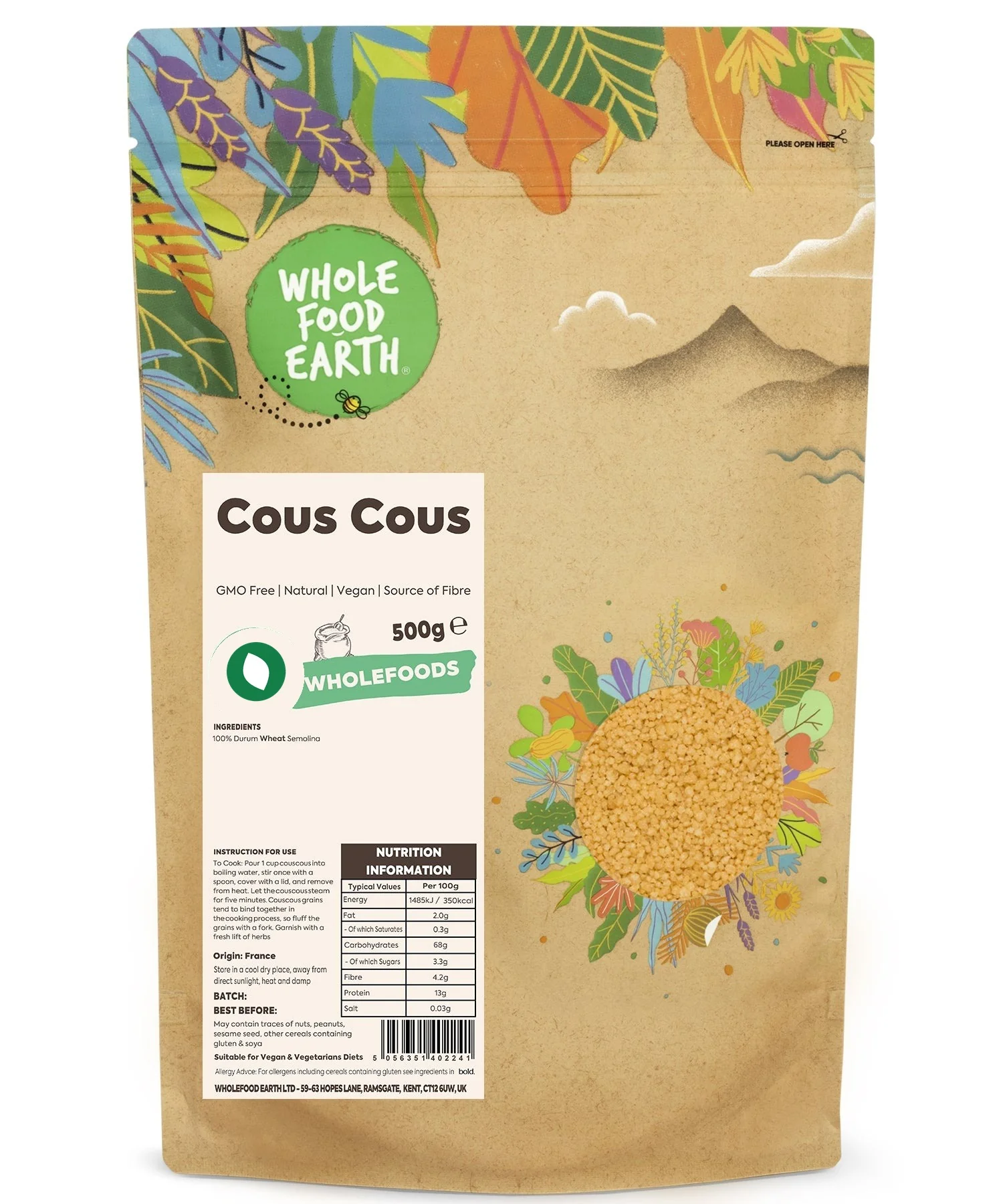
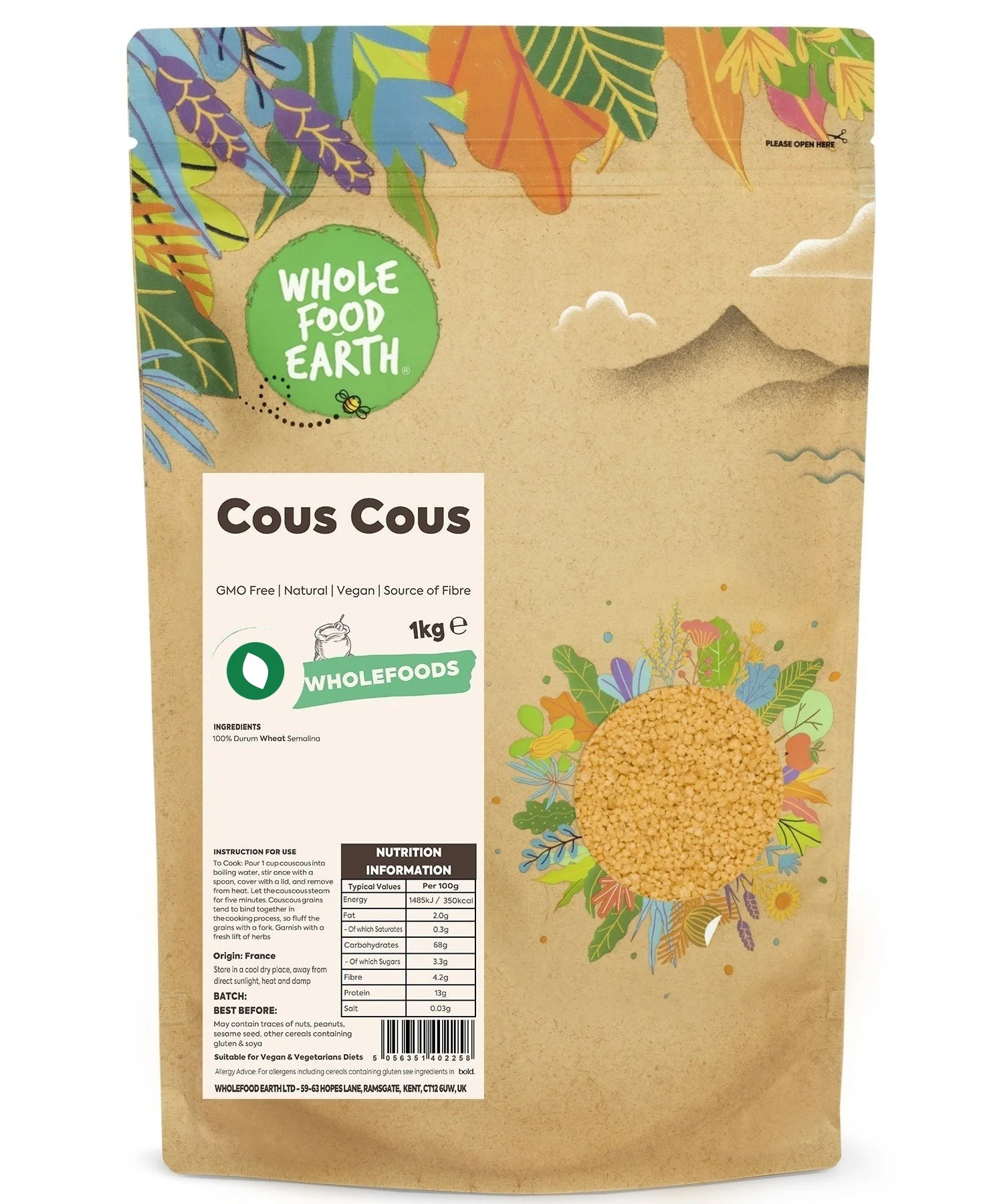
Ingredients: 100% Durum Wheat Semolina.
Allergen Information: Packed in an environment that handles nuts, peanuts, sesame, mustard, celery, soya and products containing gluten. For allergens see ingredients in bold.
Suitable for Vegan & Vegetarian diets
Country of Origin: Italy
| Typical Values | Per 100g |
| Energy (kcal) | 349 |
| Energy (kJ) | 1477 |
| Protein | 12g |
| Fat | 1.8g |
| - Of Which Saturates | 0.4g |
| Carbohydrates | 69g |
| - Of Which Sugars | 2.1g |
| Salt | 0g |
| Fibre | 4.2g |
Details & Craftsmanship
Every detail has been carefully considered to bring you the perfect product.

Details & Craftsmanship
Every detail has been carefully considered to bring you the perfect product.

Details & Craftsmanship
Every detail has been carefully considered to bring you the perfect product.

Details & Craftsmanship
Every detail has been carefully considered to bring you the perfect product.

Details & Craftsmanship
Every detail has been carefully considered to bring you the perfect product.

Details & Craftsmanship
Every detail has been carefully considered to bring you the perfect product.

Details & Craftsmanship
Every detail has been carefully considered to bring you the perfect product.
Details & Craftsmanship
Every detail has been carefully considered to bring you the perfect product.

Details & Craftsmanship
Every detail has been carefully considered to bring you the perfect product.
Details & Craftsmanship
Every detail has been carefully considered to bring you the perfect product.
Description
What Is Cous Cous?
Consisting of many tiny granules made from steamed and dried durum wheat, couscous has become a popular alternative to rice and pasta.
Why Should I Get Cous Cous?
Because of its light, fluffy texture, which is a little bland in flavour, makes it perfect for soaking up the flavours of other ingredients.
Couscous may also be used to make tabbouleh salad. Though usually cooked in water, it can also be cooked in another liquid, like apple juice, and served with dried fruit and honey.
Storage Instructions:
Store in a cool dry place, away from direct sunlight, heat and damp.
Packaging Details:
Eco Friendly 100% Recyclable Packaging. Re-sealable pouch for Long Lasting Freshness!
(Some Large sizes may have non-resealable packaging)
FAQ
How do I cook couscous? It is usually cooked in water, though it can also be cooked in another liquid such as apple juice. Its light, fluffy texture soaks up the flavours of other ingredients.
What can I make with it? Use it as an alternative to rice and pasta, or make tabbouleh salad. It can also be served with dried fruit and honey.
What is couscous made from? It is made from steamed and dried durum wheat, formed into many tiny granules.
How should I store it? Store it in a cool dry place, away from direct sunlight, heat, and damp.
What's In My Cous Cous ?
Ingredients: 100% Durum Wheat Semolina.
Allergen Information: Packed in an environment that handles nuts, peanuts, sesame, mustard, celery, soya and products containing gluten. For allergens see ingredients in bold.
Suitable for Vegan & Vegetarian diets
Country of Origin: Italy
| Typical Values | Per 100g |
| Energy (kcal) | 349 |
| Energy (kJ) | 1477 |
| Protein | 12g |
| Fat | 1.8g |
| - Of Which Saturates | 0.4g |
| Carbohydrates | 69g |
| - Of Which Sugars | 2.1g |
| Salt | 0g |
| Fibre | 4.2g |